 English
 لالعربية
 Español
 Русский
 Português
 Français
 Deutsch
 Türkçe
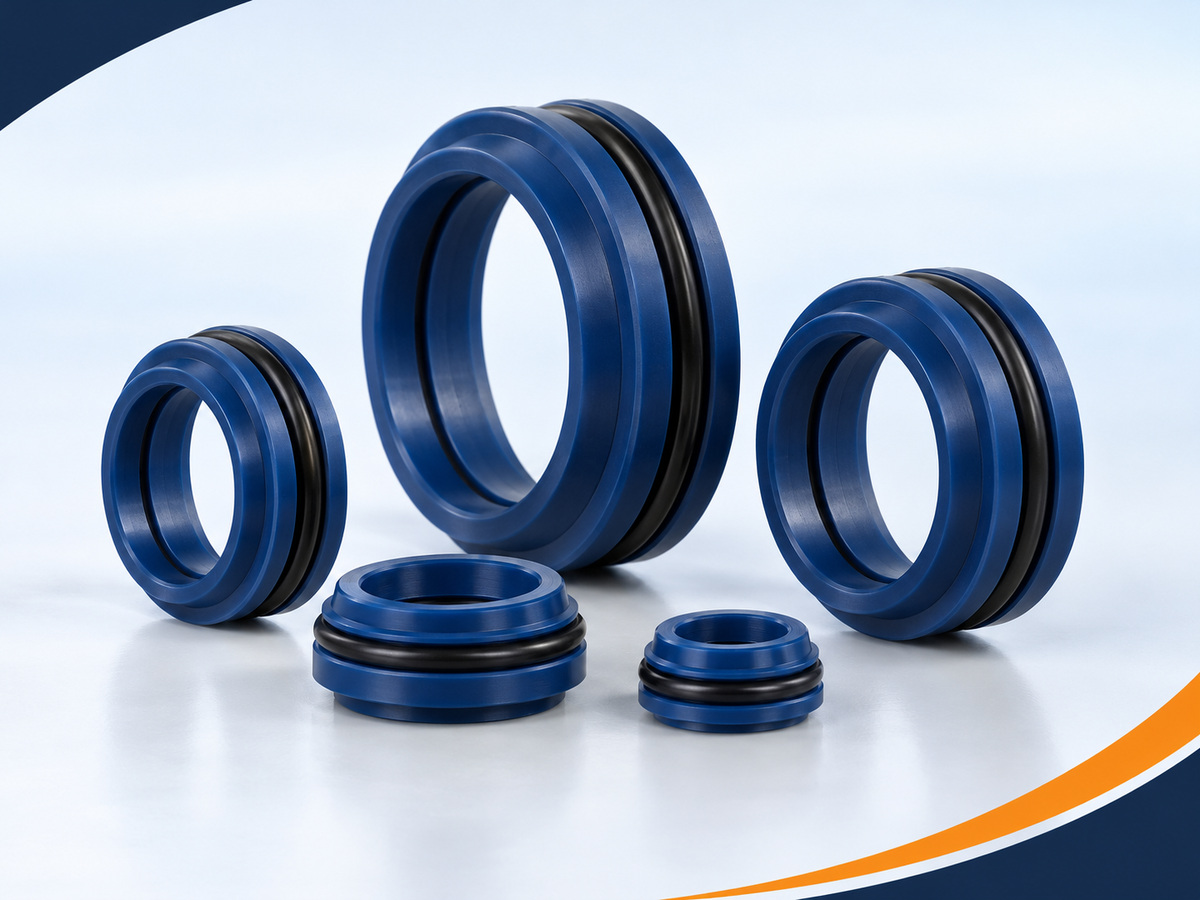
Hydraulic Buffer Seals
Hydraulic buffer seals in PU and PTFE designs for pressure peak protection. High-pressure sealing solutions for hydraulic cylinders and heavy-duty machinery.
- Custom sizes, materials and profiles available
- Reliable sealing performance under demanding conditions
- Export-ready packing and documents
1. General Specifications
| Parameter | Specification |
|---|---|
| Product Name | Hydraulic Buffer Seals |
| Product Type | Hydraulic Rod Buffer Seal |
| Sealing Function | Pressure Peak Reduction / Primary Rod Seal Protection |
| Sealing Materials | PU / TPU / PTFE Compounds |
| Energizer Material | NBR (Selected PTFE Designs) |
| Backup Ring Materials | POM / PA / Engineered Thermoplastics |
| Typical PU Hardness | 92–96 Shore A (Selected Grades) |
| Reference Temperature Range | -40°C to +100°C (Selected PU Designs) |
| Reference Working Pressure | Up to 400 bar (40 MPa) |
| High-Pressure Options | Up to 600–690 bar (Selected Profiles) |
| Reference Sliding Speed | Up to 0.5 m/s (Selected PU Designs) |
| Operating Motion | Reciprocating |
| Sealing Direction | Primarily Single-Acting |
| Compatible Media | Mineral-Based Hydraulic Oils / Selected Hydraulic Fluids |
| Dimensions | Rod Diameter × Groove Diameter × Seal Height |
| Available Sizes | Metric / Inch / Custom Sizes |
| Applications | Hydraulic Cylinders / Construction & Agricultural Machinery |
| Customization | Dimensions / Materials / Seal Profile |
| MOQ | Flexible |
2. Material Options
| Material | Main Characteristics | Typical Applications |
|---|---|---|
| PU / TPU | Good abrasion resistance, elasticity and extrusion resistance | Construction Machinery / Hydraulic Cylinders |
| Filled PTFE | Low friction and good chemical resistance; properties depend on filler formulation | Hydraulic Equipment / Low-Friction Buffer Seals |
| NBR | Elastic energizer for selected PTFE buffer seal assemblies | PTFE Slide Ring Buffer Seals |
| POM | High stiffness and dimensional stability; commonly used for anti-extrusion support | High-Pressure PU Buffer Seal Assemblies |
| PA | Good mechanical strength and resistance to extrusion in selected designs | Heavy-Duty Hydraulic Equipment |
3. Buffer Seal Design Options
| Seal Design | Main Characteristics | Typical Applications |
|---|---|---|
| PU Buffer Seal with Backup Ring | Polyurethane sealing element combined with an anti-extrusion ring | Heavy-Duty Hydraulic Cylinders |
| PTFE Slide Ring Buffer Seal | PTFE sliding ring with elastomeric energizer for low-friction sealing | Medium- and Heavy-Duty Hydraulic Systems |
| Pressure-Relief Buffer Seal | Special profile allows intermediate pressure to return toward the system side | Tandem Rod Sealing Systems |
| Reinforced High-Pressure Buffer Seal | Enhanced extrusion resistance for severe pressure peaks | Excavators / Construction Machinery / Heavy Equipment |
Hydraulic Buffer Seals are designed to protect primary piston rod seals from sudden pressure peaks and pressure fluctuations in hydraulic cylinders. Installed on the high-pressure side of the rod sealing system, they help reduce the load on the main rod seal and improve sealing reliability in demanding hydraulic applications.
These seals are widely used in construction machinery, agricultural equipment, hydraulic presses, lifting equipment and other heavy-duty hydraulic systems where frequent pressure changes and shock loads occur.
Features & Advantages
Hydraulic buffer seals are typically designed to absorb pressure spikes while maintaining controlled fluid movement within the rod sealing system.
Key features include:
Pressure Peak Protection: Helps reduce sudden pressure loads acting on the primary rod seal.
High-Pressure Capability: Selected designs are suitable for hydraulic systems operating at pressures of 400 bar or higher.
Anti-Extrusion Performance: Backup rings help prevent seal extrusion under high pressure and demanding operating conditions.
Improved Rod Seal Protection: Reduces the risk of damage and premature wear caused by pressure fluctuations.
Wear Resistance: Polyurethane and engineered PTFE materials provide good wear resistance in suitable hydraulic applications.
Pressure Relief Design: Selected profiles allow trapped pressure between the buffer seal and primary rod seal to return toward the hydraulic system.
Materials & Seal Construction
Hydraulic buffer seals are commonly manufactured using polyurethane (PU/TPU), PTFE and engineered thermoplastic materials.
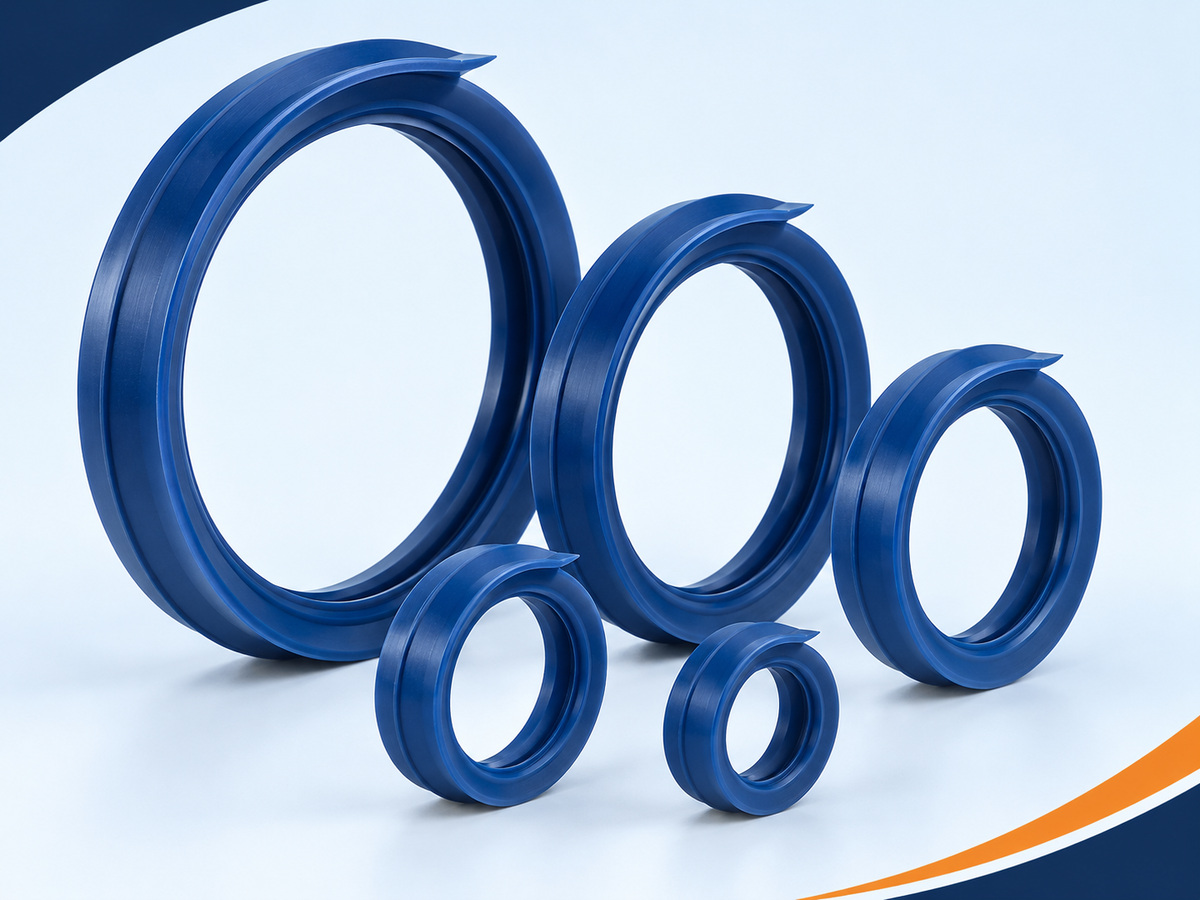
PU buffer seals provide good abrasion resistance, flexibility and resistance to extrusion. They are often combined with POM or polyamide backup rings to improve performance under high pressure.
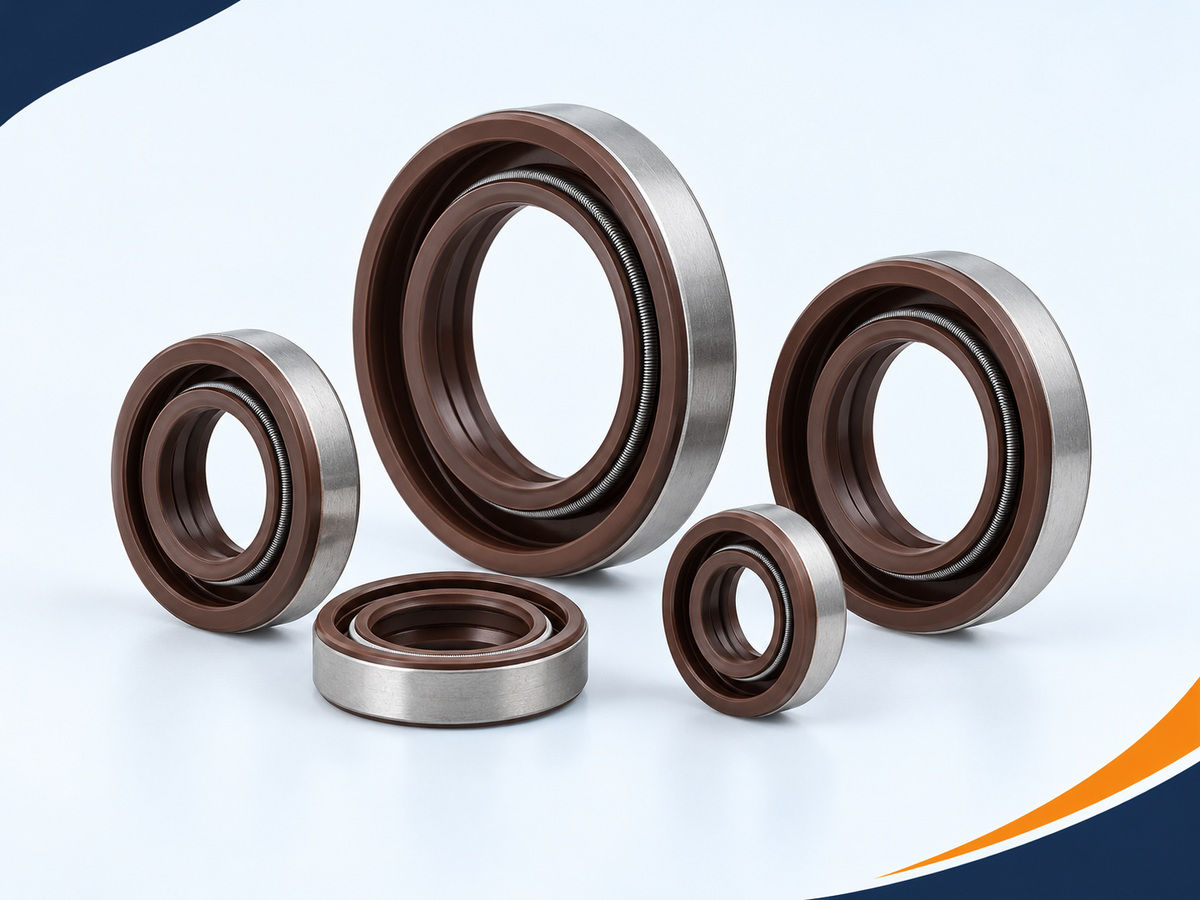
PTFE buffer seals typically use a filled PTFE sliding ring with an elastomeric energizer, often made from NBR. These designs offer low friction and are suitable for selected medium- and heavy-duty hydraulic applications.
Seal profiles may include U-cup designs, stepped sealing rings and multi-component constructions. The appropriate design depends on pressure conditions, rod speed, operating temperature and installation groove dimensions.
Typical Applications
Hydraulic buffer seals are commonly used in:
Excavators and construction machinery
Agricultural and earthmoving equipment
Hydraulic cylinders and actuators
Forklifts and material handling equipment
Hydraulic presses and injection molding machines
Cranes and lifting equipment
Mining and heavy-duty industrial machinery
Standard & Custom Supply
CORA SEALS supplies hydraulic buffer seals in various materials, dimensions and sealing configurations for equipment manufacturers, hydraulic repair companies, industrial distributors and aftermarket replacement applications.
Standard metric and inch sizes, as well as custom sealing profiles, can be sourced according to technical drawings, samples or existing part numbers.
For quotations, please provide the piston rod diameter, housing dimensions, seal profile, material and required quantity. Information about working pressure, peak pressure, operating temperature, rod speed and hydraulic fluid is also recommended to help confirm a suitable sealing solution.
Send your sealing requirements for a firm quotation.
We review product specifications, material options, pricing and lead times as soon as possible.