
 English
 لالعربية
 Español
 Русский
 Português
 Français
 Deutsch
 Türkçe
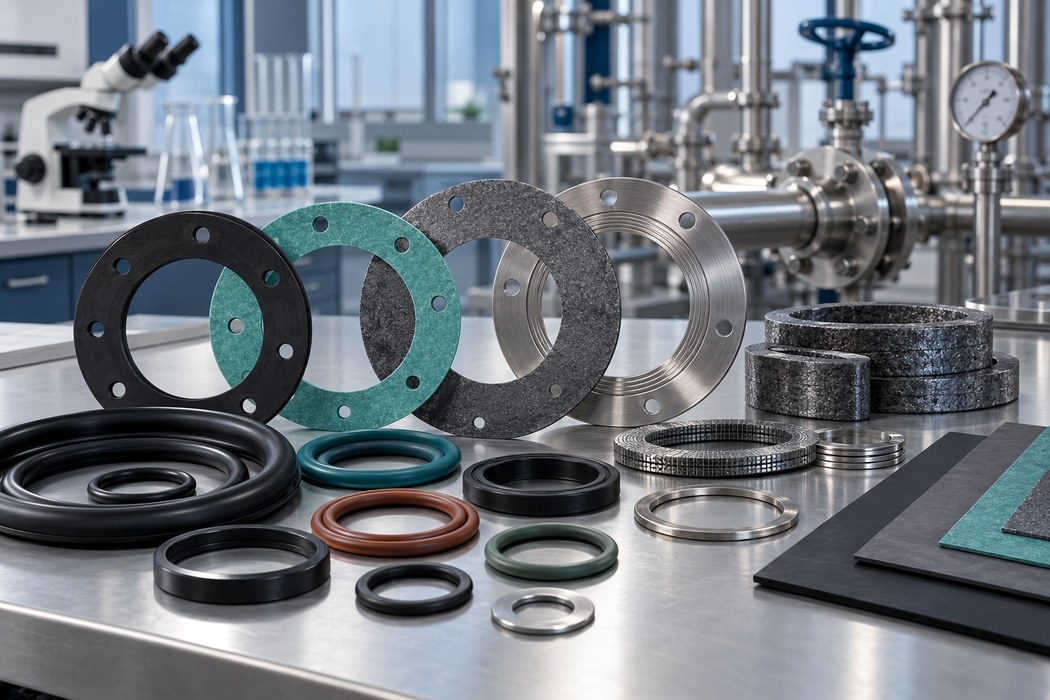
Understanding the Differences Between EPDM, NBR, FKM, and PTFE Sealing Materials
Selecting the right gasket material is an important step in ensuring reliable equipment operation. Although many gaskets may look similar in appearance, different materials can have significant differences in temperature resistance, chemical compatibility, and service performance.
Choosing an unsuitable gasket material may lead to premature aging, leakage, or unexpected maintenance requirements.
This article explains the key factors to consider when selecting gasket materials for industrial applications.
Why Gasket Material Selection Matters
A gasket works by creating a reliable sealing barrier between two surfaces. During operation, it may be exposed to:
Temperature changes
Pressure variations
Different fluids or chemicals
Continuous compression
Mechanical stress
The material must maintain its sealing performance under these conditions.
A gasket that performs well in one application may not be suitable for another environment.
Common Industrial Gasket Materials
EPDM Gaskets
EPDM is widely used in applications involving water, steam, and general industrial fluids.
Advantages:
Good resistance to water and steam
Good weather resistance
Stable performance in many temperature conditions
Common applications:
Heat exchanger gaskets
HVAC systems
Water treatment equipment
NBR Gaskets
NBR is commonly selected for applications requiring oil resistance.
Advantages:
Good oil resistance
Good mechanical strength
Suitable for many industrial environments
Common applications:
Industrial equipment
Oil-related systems
General sealing applications
FKM Gaskets
FKM provides improved resistance to high temperatures and aggressive chemicals.
Advantages:
High temperature resistance
Good chemical resistance
Suitable for demanding environments
Common applications:
Chemical equipment
Special industrial applications
High-temperature systems
PTFE Gaskets
PTFE is known for excellent chemical resistance.
Advantages:
Strong chemical compatibility
Low friction characteristics
Suitable for challenging environments
Common applications:
Chemical processing
Industrial piping systems
Key Factors Before Choosing a Gasket
Before selecting a gasket material, consider:
Operating Temperature
The material should maintain stable performance within the actual operating temperature range.
Fluid Compatibility
Different media may affect gasket materials differently. Always consider the chemical characteristics of the contact fluid.
Pressure Conditions
Equipment pressure and installation conditions also influence gasket performance.
Final Thoughts
There is no universal gasket material suitable for every application.
The best choice depends on the combination of operating temperature, pressure, fluid type, and equipment requirements.
By understanding material characteristics, customers can reduce replacement risks and improve equipment reliability.