
 English
 لالعربية
 Español
 Русский
 Português
 Français
 Deutsch
 Türkçe
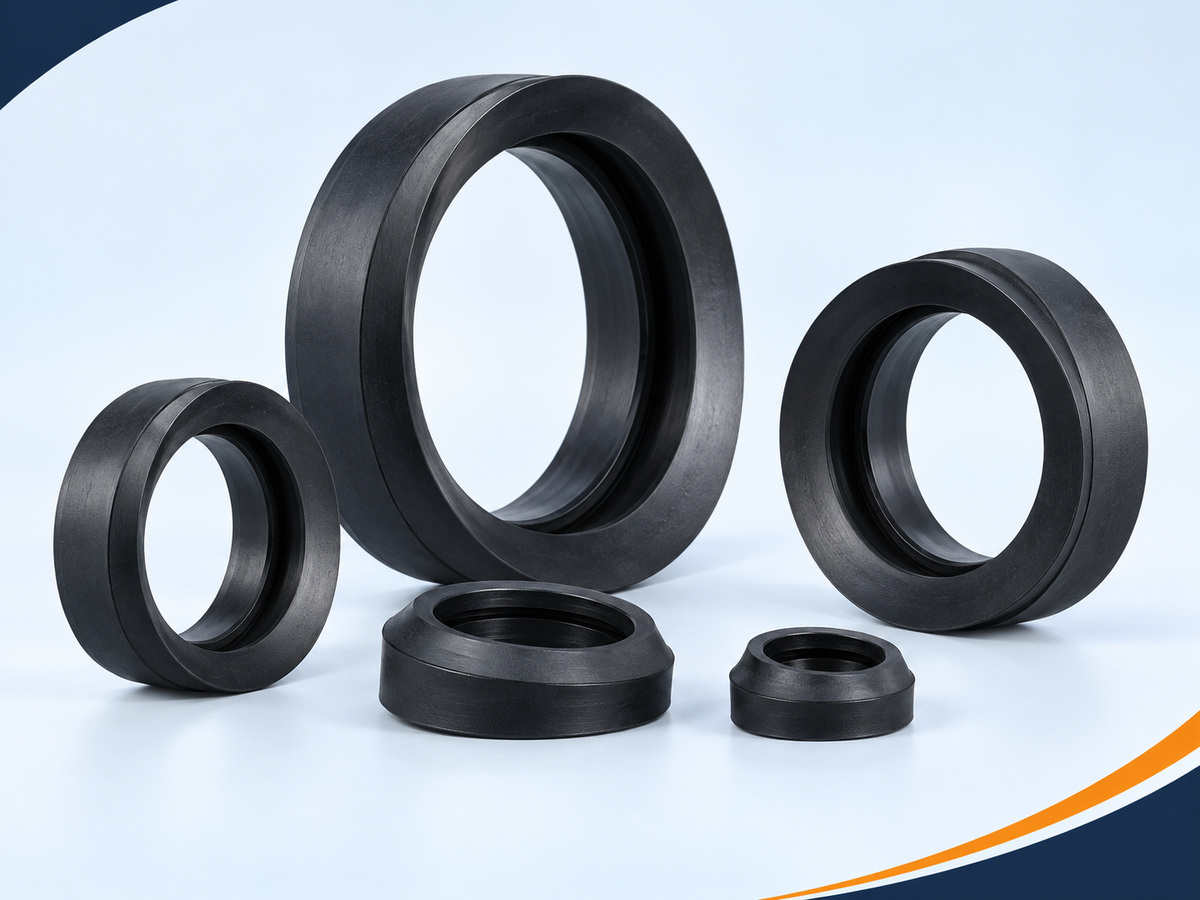
V-Ring Axial Shaft Seals
V-Ring axial shaft seals in NBR, FKM, EPDM and HNBR. VA, VS, VL and VE profiles for bearing protection, dust exclusion and industrial rotating equipment.
- Custom sizes, materials and profiles available
- Reliable sealing performance under demanding conditions
- Export-ready packing and documents
1. General Specifications
| Parameter | Specification |
|---|---|
| Product Name | V-Ring Axial Shaft Seals |
| Product Type | Axial Rotary Shaft Seal / V-Ring Seal |
| Seal Construction | All-Rubber / Flexible Axial Sealing Lip |
| Material Options | NBR / FKM / EPDM / HNBR |
| Common Profiles | VA / VS / VL / VE |
| Reference Temperature Range (NBR) | -40°C to +100°C |
| Reference Temperature Range (FKM) | -20°C to +150°C(Depends on the recipe) |
| Typical Hardness (NBR) | 60 ± 5 Shore A (Selected Compounds) |
| Reference Shaft Surface Speed | Up to 6.5 m/s (NBR, Unsupported Standard Arrangement) |
| Higher-Speed Options | 6.5–10 m/s or Higher with Suitable Support and Design |
| Reference Operating Pressure | Up to 0.03 MPa (0.3 bar), Static or Very Low Speed |
| Sealing Direction | Axial |
| Installation | Stretched onto Rotating Shaft |
| Sealing Function | Contaminant Exclusion / Bearing Protection / Grease Retention |
| Available Sizes | Standard and Custom Shaft Diameters |
| Applications | Motors / Gearboxes / Bearings / Agricultural Machinery |
| Customization | Dimensions / Profile / Elastomer Compound |
| MOQ | Flexible |
2. V-Ring Material Options
| Material | Main Characteristics | Typical Applications |
|---|---|---|
| NBR | Good resistance to mineral oils and greases; economical for general industrial service | Gearboxes / Motors / Bearing Housings |
| FKM | Improved heat resistance and compatibility with many oils, lubricants and selected chemicals | High-Temperature Equipment / Industrial Drives |
| EPDM | Good resistance to water, ozone and weathering; generally unsuitable for petroleum oils | Water-Exposed Equipment / Industrial Utilities |
| HNBR | Improved heat, ozone and aging resistance compared with conventional NBR | Heavy-Duty Machinery / Industrial Equipment |
3. V-Ring Profile Options
| Profile | Main Characteristics | Typical Applications |
|---|---|---|
| VA / VR1 | Standard V-Ring profile for general-purpose axial sealing | Motors / Gearboxes / Bearing Assemblies |
| VS / VR2 | Wider body with a tapered back face for improved shaft positioning | Agricultural Machinery / Automotive Equipment |
| VL / VR3 | Compact axial cross-section for restricted installation spaces | Compact Machinery / Labyrinth Seal Protection |
| VE / VR4 | Heavy-duty profile for large shafts and greater axial displacement | Heavy-Duty Equipment / Large Bearing Assemblies |
V-Ring Axial Shaft Seals are flexible, all-rubber sealing rings designed to protect bearings, rotary shafts and other mechanical components from dust, dirt, water splashes and external contaminants. They are commonly used as secondary seals in industrial equipment, particularly where bearing protection and contaminant exclusion are important.
Unlike conventional radial shaft oil seals, V-Rings are mounted directly onto the rotating shaft and rotate with it. Their flexible sealing lips make axial contact with a stationary counterface, such as a bearing housing, metal flange or machine component.
This sealing arrangement provides effective contamination protection while accommodating a certain degree of axial movement, shaft misalignment and dimensional variation.
Features & Advantages
Axial Sealing Design: A flexible lip seals against a stationary surface perpendicular to the shaft.
Contaminant Protection: Helps prevent dust, dirt, grease-borne particles and water splashes from entering bearing assemblies.
All-Rubber Construction: Flexible elastomeric design without a conventional metal case or garter spring.
Easy Installation: The elastic ring can be stretched over the shaft without requiring a press-fit housing bore.
Low-Friction Operation: Light lip contact helps reduce friction, while certain high-speed designs can operate with reduced lip contact.
Flexible Shaft Positioning: Accommodates limited axial movement and shaft misalignment depending on the seal profile.
Additional Bearing Protection: Can be installed alongside radial shaft seals to provide an extra barrier against contamination.
Material Options
V-Ring seals are commonly manufactured from NBR and FKM elastomers, with EPDM, HNBR and other specialty compounds available for selected applications.
NBR provides good resistance to mineral oils and greases and is widely used in general industrial equipment.
FKM offers improved heat resistance and compatibility with many oils, lubricants and selected chemicals.
EPDM is suitable for water-related applications and environments exposed to ozone or weathering, while HNBR provides improved heat and aging resistance compared with conventional NBR.
Material selection depends on the operating medium, temperature, shaft speed and environmental conditions.
Common V-Ring Profiles
V-Rings are available in several profiles to suit different shaft diameters, installation spaces and sealing requirements.
Common configurations include VA, VS, VL and VE types. VA is widely used for general bearing protection, while VS provides a wider body for secure positioning. VL is designed for applications with limited axial space, and VE is suitable for larger shafts and demanding industrial environments.
Typical Applications
V-Ring axial shaft seals are widely used in:
Electric motors and industrial drives
Gearboxes and speed reducers
Bearing housings and assemblies
Agricultural and construction machinery
Pumps and industrial rotating equipment
Conveyor systems and material handling equipment
Heavy-duty industrial machinery
Standard & Custom Supply
CORA SEALS supplies V-Ring axial shaft seals in various materials, sizes and sealing profiles for industrial distributors, equipment manufacturers and maintenance applications.
Standard VA, VS, VL and VE style profiles, as well as custom dimensions and elastomer compounds, can be sourced according to application requirements.
For quotations, please provide the shaft diameter, required V-Ring profile, material and quantity. Existing part numbers, drawings or samples can help identify suitable replacements. Operating temperature, shaft speed and exposure to water, dust or chemicals should also be provided when selecting a seal for demanding environments.
Send your sealing requirements for a firm quotation.
We review product specifications, material options, pricing and lead times as soon as possible.
Related seals
 Alfa Laval T25P Replacement Plate Heat Exchanger Gasket
 Valve Seat Seals
 Valve Stem Packing
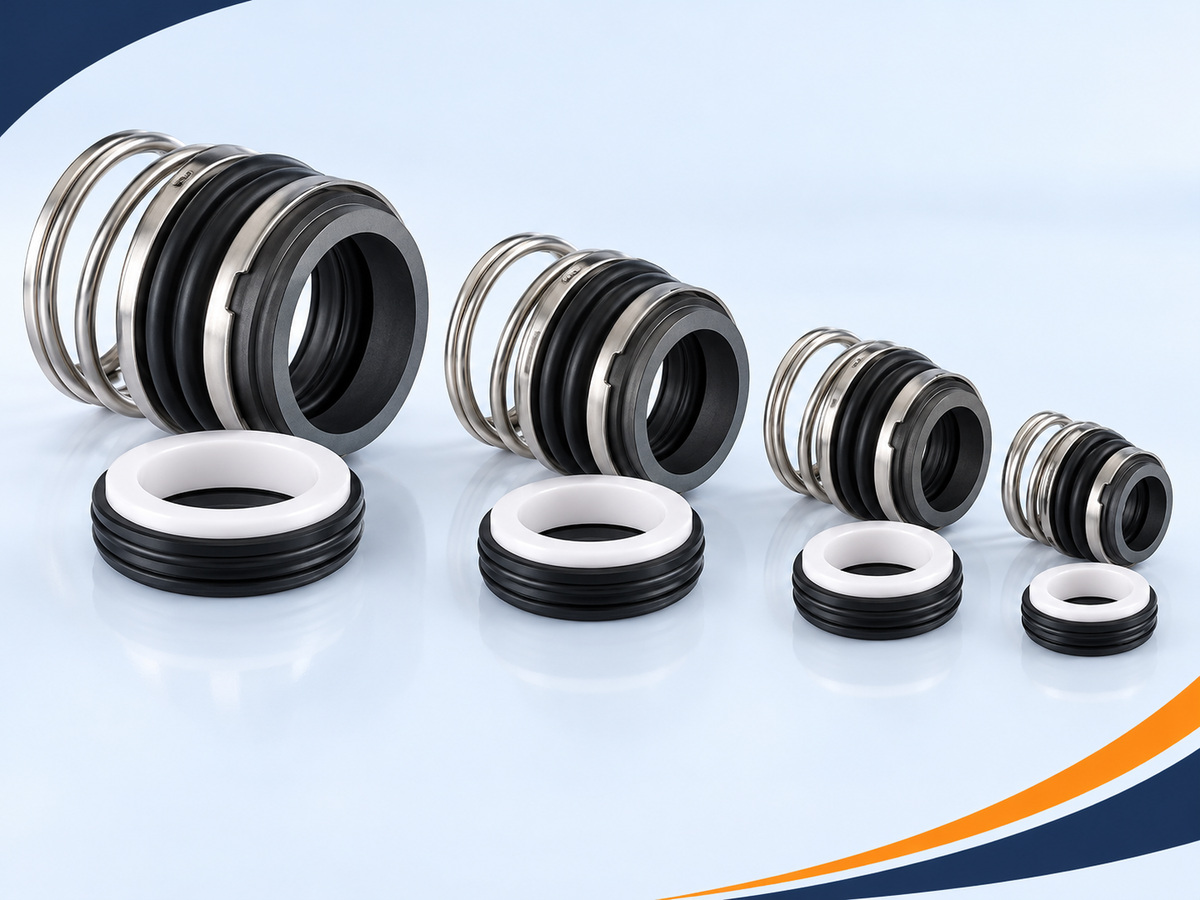 Type 1 Style Elastomer Bellows Mechanical Seal